 PYFF9 brings together 290 researchers from 37 countries
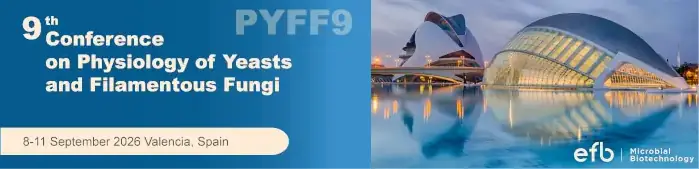
The ninth edition of the Conference on Physiology of Yeasts and Filamentous Fungi (PYFF9) was held in Valencia from 8 to 11 September 2026. It was co-organised by members of the Institute of Agrochemistry and Food Technology (IATA), part of the Spanish National Research Council (CSIC), and by the Microbial Biotechnology Division of the European Federation of Biotechnology (EFB).
Since its first edition in Copenhagen in 2001, PYFF has taken place every three years and has become a key meeting point for academic and industrial researchers working on yeasts and filamentous fungi.
A truly international community
PYFF9 welcomed 290 participants from 37 countries across five continents. Researchers from outside Spain made up more than 70% of attendees.
The largest delegations came from Spain, the Netherlands, Germany, France and Sweden, with strong participation from Austria, Finland, Brazil, Italy and Denmark. Delegates also travelled from Chile, Canada, South Africa, the United States, Argentina, Mexico, Uruguay, Japan, China, Taiwan and Botswana, reflecting the global reach of the field.
A rich scientific programme
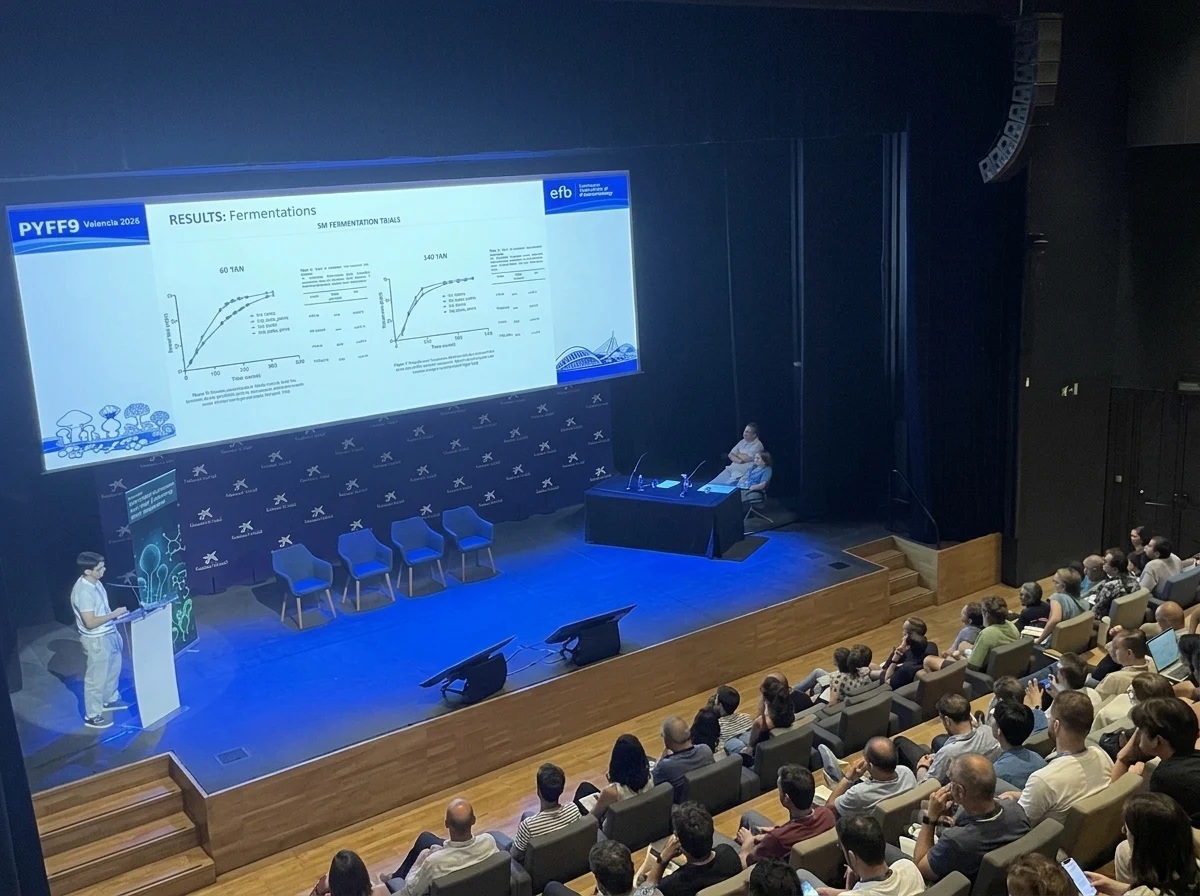
The scientific programme included 66 oral presentations. Two keynote lectures framed the programme:
- Joseph Schacherer - University of Strasbourg, opened the conference with a lecture on the yeast phenotypic landscape in the pangenomic era.
- Antonio Di Pietro - University of Córdoba, closed the conference by showing how transposons and accessory genomic regions drive adaptation in a clonally evolving fungal pathogen.
In between, eight thematic sessions combined invited lectures with short talks selected from submitted abstracts, giving a prominent platform to early-career researchers:
- Fungal physiology and metabolism. Topics included sugar metabolism and its regulation, non-canonical cofactors for yeast cell factories, and the genetic control of the wine metabolome.
- Evolutionary strategies of fungi. Speakers covered how yeasts adapt to human-made environments, hybridisation and introgression in fermentation settings, and the long-standing question of how to define species boundaries in microorganisms.
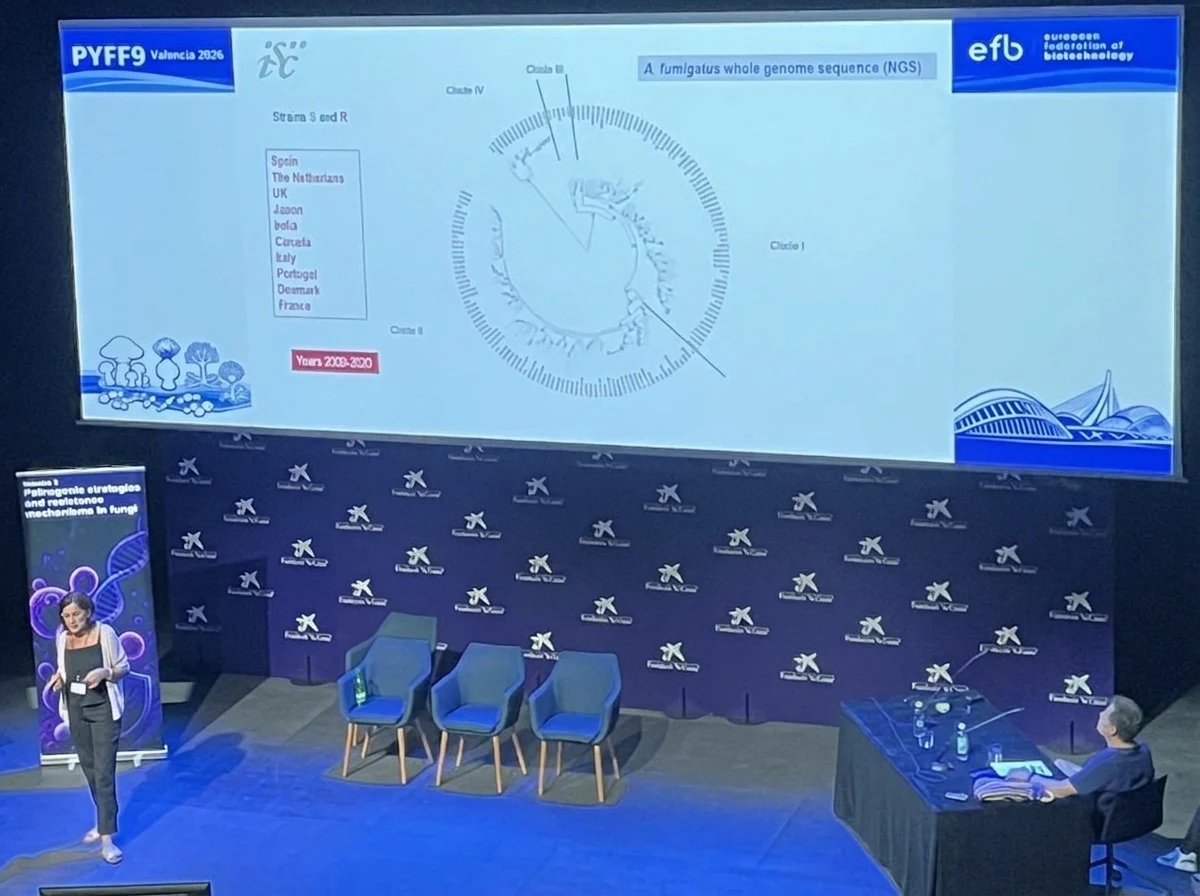
- Pathogenesis and resistance. This session focused on antifungal resistance and tolerance in Candida auris and Aspergillus fumigatus, and on the genomic factors that separate pathogens from harmless endophytes.
- Synthetic biology and innovative technologies. Talks presented high-throughput genetic engineering platforms, fungal biofoundries, in vivo mRNA imaging and synthetic yeast communities for sustainable food production.
- Fermentation in food and beverages. Contributions ranged from non-Saccharomyces yeasts addressing current winemaking challenges to mycoprotein from agricultural residues and wild yeasts behind new Patagonian whiskies.
- Yeasts and fungi as cell factories. Speakers discussed upcycling plastic-derived monomers, new molecular insights into citric acid production, and the production of pigments, enzymes and natural products in engineered hosts.
- Fungi and the bioeconomy. Highlights included fungal materials for sustainable construction, upcycling of waste carbon, plastic biodegradation and single-cell protein from C1 gases.
- Artificial intelligence and data science. Speakers showed how machine learning, digital twins and genome-scale models are changing the way fermentation and yeast phenotypes are predicted.

Lively poster sessions
Two dedicated poster sessions featured more than 170 posters covering every conference theme. They sparked extensive discussion and gave participants time to explore new collaborations across disciplines and between academia and industry.
Networking in Valencia
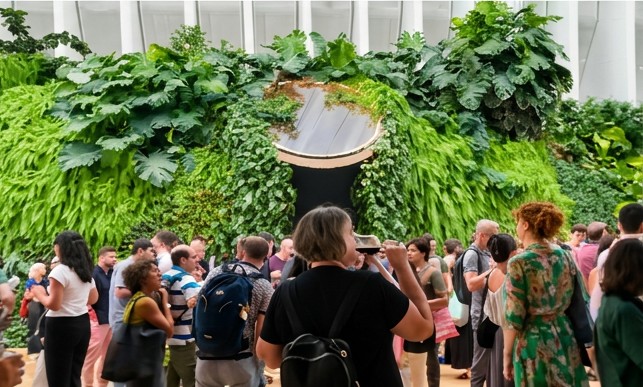
The social programme included an opening reception on the first evening and a conference gala dinner at The Westin Valencia. Both events gave participants time to reconnect with colleagues and build new networks in a relaxed setting.
Looking ahead
The organisers and the EFB Microbial Biotechnology Division warmly thank all speakers, chairs, poster presenters, sponsors and participants who made PYFF9 a success.
The yeast and filamentous fungi community will meet again at the next edition of PYFF in 2029.
If you would like to receive updated about the upcoming events, please sign up for the EFB newsletter.
